DisclosureWe may earn a commission when you buy through links on this page. This doesn't affect our recommendations. Learn more
Is it really a deal? A calmer way to compare gadgets
A research-based, calmer framework for judging whether a gadget offer is worth it, using a key organizer, a slim power bank and a powered scrubber as worked examples, with no live deals verified.
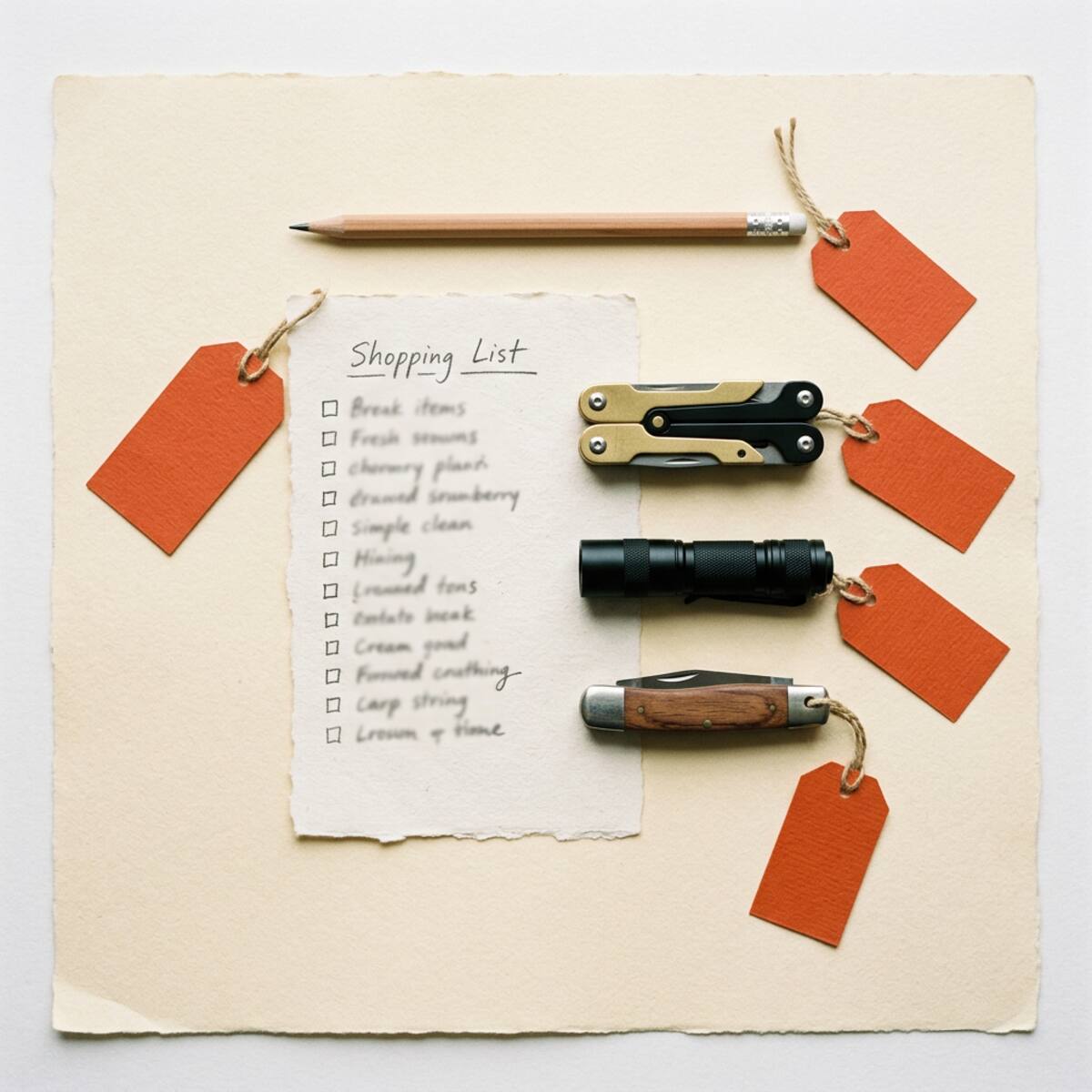
How this guide was put together
This is a first-launch guide based on research into manufacturer-style product descriptions and general ownership considerations. We have not independently tested any product mentioned here, and we have not verified any live offer. Treat what follows as a way to ask better questions, not as a verdict on any item.
Start by doubting the word deal
A deal is only a deal if the item solves a problem you actually have and costs less in total than your realistic alternatives. A countdown timer, a crossed-out figure or a cheerful banner tells you nothing about either. Before comparing anything, write down the job you want done in one plain sentence, such as keeping keys from jangling, carrying emergency phone power, or scrubbing grout with less effort. If you cannot write the sentence, the offer is probably doing the persuading, not your need.
Count the total cost
- Item cost as shown at checkout, not on the product tile.
- Shipping, taxes and handling fees, plus any membership you would need to join.
- Add-ons that are required in practice, such as spare heads, cables, a wall adapter or extra spacers.
- Return cost: who pays postage, whether a restocking fee applies, and how long you have.
- Replacement and upkeep, including consumable parts and the effort of maintenance.
- The cost of what you already own, which is often zero.
What Best means in our headlines
When you see Best in a headline on this site, it signals editorial suitability for a described situation. It is not a laboratory ranking, a score, or a claim that we measured one product against another. Suitability depends on your keys, your phone, your surfaces and your habits, so a product can be a sensible fit for one person and a poor one for another.
Comparison criteria that travel across gadgets
- Compatibility: does it work with the specific things you own?
- Stated specifications: are they current, complete and consistent across the listing and the manual?
- Limits: what does the description admit it cannot do?
- Setup effort: assembly, charging, learning time.
- Ongoing care: checks, cleaning, battery habits.
- Return terms: a generous window matters most for items whose fit you cannot judge on a screen.
- Fallback: what you will do if it disappoints.
Three gadgets as worked examples
These three come from different corners of everyday life, which makes them useful for practicing the same questions. None is endorsed here, and no price or availability is implied.
KeySmart: a folding stack for flat keys
Per its description, this is a compact organizer that holds compatible flat keys between side plates, with keys rotating outward for use.
- Pro: keeps flat keys in a repeatable order.
- Con: not every key or electronic fob fits.
Suitable for people with a handful of ordinary flat keys who want a tidier pocket, or shoppers considering a practical gift. Who should not buy it: anyone whose key ring is dominated by bulky car fobs, unusually thick or oddly shaped keys, or who expects a guaranteed fit without measuring. Before ordering, count your keys and check hole size, blade length, spacer options and fob support. Expect to assemble it yourself and to check the screws from time to time.
ChargeCard: slim backup power
The description presents a compact rechargeable power bank meant for a pocket or wallet.
- Pro: compact backup power.
- Con: its small size limits available capacity.
Suitable for someone who wants a modest top-up for a compatible phone and values portability over quantity. Who should not buy it: people who need to charge several times, power a tablet or laptop, or who cannot confirm their device uses a matching connector and power requirement. Compare capacity in watt-hours (Wh) where the listing provides it, since milliamp-hour figures are not directly comparable across different voltages. Check connector types, output rating and your device requirements. Some stored energy is lost to conversion, so do not expect the full rated capacity to arrive in your phone, and no specific recharge percentage should be assumed.
For safety, use sensible battery habits: follow the maker's instructions, stop using any battery that swells, overheats or is visibly damaged, and avoid leaving it in hot places. If you plan to fly with it, check your airline's current rules on power banks and carry-on requirements before you travel, because policies change.
Synoshi Power Spin Scrubber: a powered brush
This is described as a rechargeable cleaning brush with interchangeable heads for suitable household surfaces.
- Pro: interchangeable cleaning heads.
- Con: it requires charging, and delicate surfaces can scratch.
Suitable for shoppers with durable surfaces who dislike hand scrubbing and are willing to keep a battery charged. Who should not buy it: people whose main surfaces are polished, coated or easily scratched, or who want a tool they can rinse under water without reading the manual. Match the head and cleaning product to the surface, spot-test in a hidden area, and look up the actual water-resistance rating. Never submerge any part unless the instructions explicitly permit it.
Setup and ownership: the hidden half of the price
Each example asks something of you after purchase. The key organizer asks for assembly and occasional tightening. The power bank asks you to remember to recharge it and to store it sensibly. The scrubber asks for charging, head changes and careful cleaning. If a task sounds like a chore you will skip, weigh that honestly. A gadget that lives in a drawer is expensive at any price.
Questions to ask a seller or check in the listing
- What exactly is included in the box, and which parts are sold separately?
- Which keys, fobs, phones or surfaces are known not to work?
- Are the specifications current for this version, and where is the manual?
- What is the return window, who pays for return shipping, and does opened packaging affect eligibility?
- How long does the warranty last, and what does it exclude?
- For battery items, what is the capacity in Wh, the output rating and the charging connector?
- For the scrubber, what is the water-resistance rating and which surfaces does the maker advise against?
- Is the stated price the final price at checkout?
Alternatives: keeping what you have
The strongest competitor to any gadget is often your current setup. A plain key ring, a small pouch or a separate car key may serve you well. A phone cable and a wall charger by your desk may cover most of your power needs, and a sponge or hand brush costs little and will not scratch a surface it was never meant for. Consider also waiting: if an item still appeals to you after a week, that is a stronger signal than a rushed click. Borrowing from a friend can settle a fit question cheaply.
Practical decision guidance
No live deal was verified for this guide, so confirm everything yourself at checkout. Then work through four steps:
- Write the single problem you want solved.
- Check compatibility against what you own, with measurements or model names in hand.
- Add up the total cost, including returns and upkeep, and compare it with doing nothing.
- Buy only if the return terms are clear and you can name who the product is not for, and you are not in that group.
If any step feels shaky, the calm choice is to keep what you have and look again later.
Our coverage is research-based, not hands-on testing. Source product descriptions have not been independently tested; verify the current seller specifications before purchase. See our Editorial Policy.
The Sunday Shortlist
A short list of useful finds. Zero hype.
Occasional emails, mostly reading, sometimes a link. Unsubscribe any time.